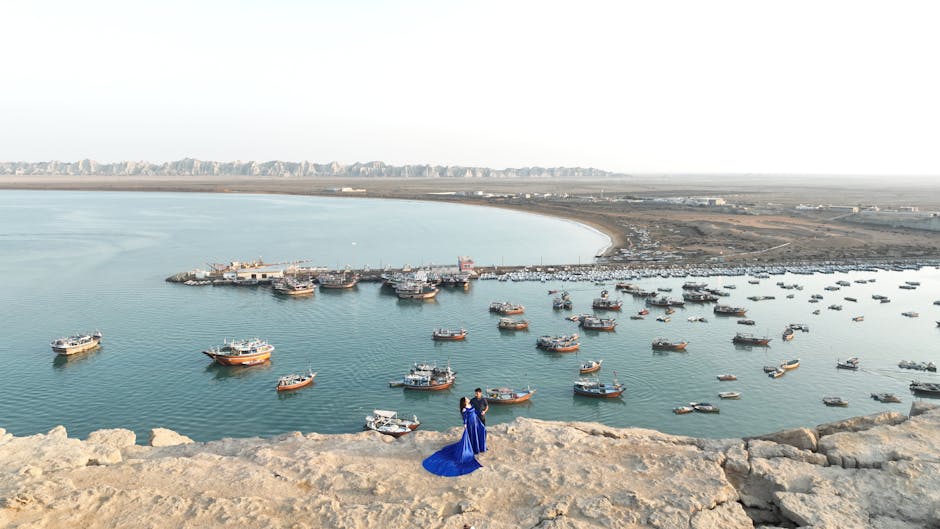
A storm is brewing on the geopolitical high seas, and its epicenter is a port on the southeastern coast of Iran. For years, India has meticulously built a strategic lifeline at the Chabahar Port, a gateway designed to unlock trade with Afghanistan and the resource-rich heart of Central Asia, all while sidestepping the formidable barrier of Pakistan. But a sudden and decisive move by the United States has sent shockwaves through this carefully constructed corridor, leaving India’s ambitions hanging in the balance. The U.S. has revoked the sanctions waiver that once shielded the project, a powerful signal that threatens to pull the rug out from under New Delhi’s feet.
The history of this port is a saga of long-term vision and persistent challenges. India’s interest in Chabahar dates back to 2003, a bold strategic play to secure its place in a dynamic region. The idea was simple but powerful: a deep-water port on the Gulf of Oman, just 170 kilometers from the Chinese-run Gwadar Port in Pakistan, would not only provide a direct route to Afghanistan for humanitarian aid and trade but would also serve as a crucial counterweight to Beijing’s growing influence. It was a grand design, a testament to India’s diplomatic and economic foresight. Over the past two decades, New Delhi has poured more than $120 million into the project, taking operational control of the Shahid Beheshti terminal in 2018 through its state-run entity, India Ports Global Limited (IPGL).
For a time, the project operated under a special exemption from U.S. sanctions, a tacit acknowledgment from Washington of the port’s humanitarian and economic importance. That grace period has now ended. The U.S. State Department’s statement was clear and uncompromising: the revocation of the waiver is effective from September 29, and any person or entity operating the port may be exposed to sanctions under the Iran Freedom and Counter-Proliferation Act (IFCA). This decision, framed as part of the “maximum pressure” campaign against Iran’s illicit financial networks and its Islamic Revolutionary Guard Corps (IRGC), has put India in a precarious position.
The implications for India are profound and multi-faceted. On an economic level, the revocation threatens to freeze the significant investments already made and to halt future expansion plans. The port’s capacity, which India aimed to increase fivefold to 500,000 TEUs, is now under a dark cloud of uncertainty. More than just a logistics hub, Chabahar is a cornerstone of the International North-South Transport Corridor (INSTC), a multi-modal route connecting India to Central Asia and Russia. The INSTC is a strategic project of immense scale, and the disruption at its most critical node could ripple across the entire network, undermining India’s efforts to deepen trade ties with Eurasia.
Beyond the financial and logistical fallout, the U.S. move creates a diplomatic tightrope for India. New Delhi has a burgeoning strategic partnership with Washington, a relationship built on shared democratic values and a common concern over China’s rise. Simultaneously, India maintains longstanding economic and strategic ties with Iran, a crucial energy partner. The U.S. decision forces India to choose, or at least to navigate a complex path between two of its most important international partners. It tests India’s ability to maintain its strategic autonomy in a world where global superpowers are increasingly demanding allegiance.
In this high-stakes game of diplomacy and economic chess, the Chabahar Port is more than just a piece of infrastructure; it is a symbol. It represents India’s aspiration to break free from regional constraints, to project its power and influence, and to chart a course independent of its rivals. The US move, while aimed at Iran, lands squarely on India’s shoulders, challenging its resolve and forcing a re-evaluation of its strategic calculus. The question now is not just about the fate of the port, but about how New Delhi will manage this diplomatic conundrum and protect its vital interests in a shifting geopolitical landscape.