The architecture of digital discovery has undergone a fundamental transformation, shifting search from a retrieval-based index of web links into an execution-oriented task environment.[1, 2, 3] During the Google I/O conference in May 2026, Google introduced a suite of updates that accelerated what it defines as the “agentic Gemini era”.[4] By embedding advanced model capabilities directly into its core infrastructure, Google has altered organic search visibility, click-through dynamics, e-commerce mechanics, and web development protocols.[5, 6] This report deconstructs these structural changes, evaluates their quantitative impact on the web ecosystem, and outlines the technical and strategic methodologies required to navigate this new environment.
[flip3d id=”3209″]
——————————————————————————–
Technical Infrastructure: TPU 8t/8i, Gemini 3.5 Flash, and the Multimodal Frontier
At the core of Google’s 2026 search overhaul is Gemini 3.5 Flash, which has been deployed globally as the default model powering AI Mode.[5, 7] Engineered specifically for low latency and action-oriented tasks, Gemini 3.5 Flash operates approximately four times faster than competing frontier models on output tokens per second.[4, 5] Benchmark evaluations indicate that Gemini 3.5 Flash outperforms the prior Gemini 3.1 Pro model across multiple developer, coding, and agentic benchmarks.[5]
| Benchmark Platform | Gemini 3.5 Flash Performance Metric | Target Competence Domain | Source Reference |
|---|---|---|---|
| Terminal-Bench 2.1 | 76.2% | Sandboxed shell environment execution | [5] |
| GDPval-AA | 1656 Elo | Real-world, economically valuable task validation | [4, 5] |
| MCP Atlas | 83.6% | Tool orchestration and Model Context Protocol alignment | [5] |
This model layer is supported by a dual-chip processing architecture comprised of TPU 8t and TPU 8i.[4] The TPU 8t processor is optimized for large-scale pretraining, delivering nearly three times the raw computing power of Google’s previous generation.[4] By leveraging the JAX and Pathways frameworks, Google has distributed training workloads across more than 1×10⁶ TPUs globally, allowing model builders to train larger, more capable models in weeks rather than months.[4] Conversely, the TPU 8i processor is designed for inference, optimizing processing speed to mitigate the latency challenges of agentic multi-turn reasoning loops.[4]
These hardware and software integrations support Gemini Omni, a model capable of generating output samples across any modality from any input type.[4, 8] Gemini Omni is integrated within YouTube Shorts Remix, allowing users to build custom, cloned AI avatars that mimic their physical appearance and vocal characteristics.[9] This focus on multimodality aligns with the introduction of Google’s Android-powered smart glasses and Android XR devices, which are designed to support hands-free, real-world visual search queries.[8, 10]
Google’s foundational AI research has also expanded into scientific and biological discovery.[11] Gemini for Science incorporates Empirical Research Assistance (ERA) and Co-Scientist, both of which were published in Nature in May 2026.[11] Acting as a code-optimizing research engine, ERA utilizes tree search to generate, score, and iterate through thousands of parallel code variants to solve complex optimization problems, such as forecasting seasonal runoff across California’s river basins.[11]
At the edge, Google is developing Coralboard platforms powered by the Coral NPU, a machine learning accelerator core designed for energy-efficient edge applications in wearables and sensors.[11] A practical demonstration of this hardware is Jellectronica, an experiment that translates the movement of sea jellies into generative sound via an object detection model running locally on a Coral NPU.[11] In consumer health, Google has rolled out its new Google Health app and personal health large language model to all existing Fitbit users, enabling personalized, adaptive coaching based on sleep and fitness data.[11]
——————————————————————————–
Interface Evolution: The Redesigned Search Box, Persistent Context, and Feature Deprecation
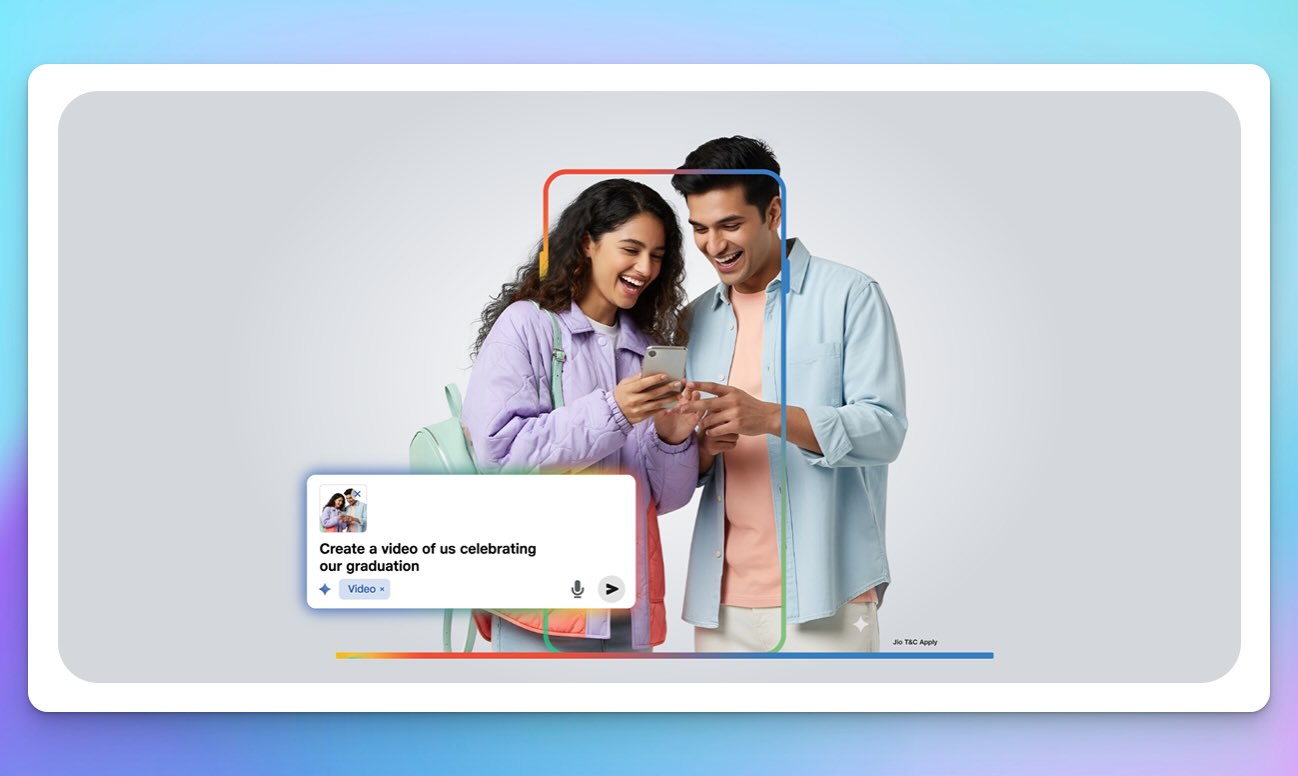
Google’s consumer-facing interface has undergone its most significant redesign in over 25 years.[5, 7] The traditional search box has been replaced with an intelligent, expandable input canvas designed to anticipate user intent.[5, 7] Beyond standard text, the interface natively accepts images, files, videos, and active Chrome tabs as simultaneous inputs, prompting users with AI-powered query suggestions that extend beyond basic autocomplete.[5, 7]
This interface update is coupled with a conversational search flow.[5, 12] Users can transition from a standard Search Engine Results Page (SERP) featuring an AI Overview directly into an active AI Mode dialogue.[5, 12] The search system maintains contextual parameters across these transitions, eliminating the need for users to restate constraints during multi-turn queries.[5, 7] Research on user behavior indicates that these persistent conversational threads have altered interaction patterns, prompting longer query evaluation times and reverse-scrolling behaviors on the SERP.[13]
At the same time, Google has removed traditional rich result formats, completely phasing out all remaining FAQ rich results and their associated reporting within Search Console.[14] This change signals a shift away from structured data designed for visual SERP enhancements, redirecting those signals into training and retrieval inputs for synthesized AI Overviews.[14]
Furthermore, Google has expanded its Personal Intelligence integration within AI Mode to nearly 200 countries and 98 languages.[12, 15] This opt-in feature allows the search engine to scan connected Gmail, Photos, and Calendar accounts to personalize search results based on the user’s personal context.[15, 16]
These interface modifications also affect Google’s content discovery feeds.[17] Gemini-generated AI summaries now appear in approximately 51% of Discover feeds, transforming Discover from a secondary traffic referral channel into a synthesized information stream.[17]
However, this reliance on automated retrieval has introduced language identification errors in multilingual regions, such as Catalonia.[18] These errors cause retrieval systems to misidentify query languages, resulting in skewed citations, mistranslated AI summaries, and localized ranking volatility.[18]
——————————————————————————–
Quantitative Click Dynamics: The Brand Equity Gap and Traffic Erosion
The rapid adoption of AI Mode—surpassing one billion monthly active users within a year of launch, with query volume doubling every quarter—has led to a reduction in traditional organic search referral traffic.[15] Because Google’s search engine now synthesizes answers and resolves user intents within its own interface, the necessity for users to click through to external publisher websites has declined.[1, 15, 19]
| Organic Search Metric | Pre-AI Mode Baseline | AI-First SERP Value | Net Impact (Relative / Absolute Change) | Source |
|---|---|---|---|---|
| Position-One Click-Through Rate | 27.0% | 11.0% | −59.3% relative decline when AI Overview is present | [2] |
| Top-Ranking Page Organic CTR | Traditional SERP | −34.5% | −34.5% absolute drop when AI Overviews appear | [15] |
| Overall Click-Through Probability | 15.0% (without AIO) | 8.0% (with AIO) | −46.7% relative decline (68,000 query study) | [15] |
| Global Search Referrals to Publishers | Historical baseline | −33.0% YoY | −33.0% absolute drop in publisher referral traffic | [2] |
| Weak-Brand Referral Traffic Loss | Two-year baseline | −60.0% | −60.0% collapse in non-branded search referrals | [15] |
| Strong-Brand Referral Traffic Loss | Two-year baseline | −22.0% | −22.0% decline, establishing a 38% brand moat | [15] |
| Organic-to-Citation Overlap Rate | 76.0% (mid-2025) | 17.0% to 54.0% | Only 17–54% of AIO citations come from top-10 results | [15] |
| AIO Cited Brand Click-Through Lift | Uncited baseline | +35% organic | +35% organic and +91% paid click lift | [5] |
| Branded Query Click-Through Lift | Standard CTR | +18.0% | +18.0% CTR increase under AI Overviews | [15] |
| Citation Status Volatility Rate | Stable organic ranks | 70.0% | 70.0% of cited pages change status in 2–3 months | [15] |
| United States Zero-Click Baseline | Historical baseline | 58.5% | Persistent zero-click benchmark | [15] |
The mathematical expression of the overall decline in query click-through probability can be evaluated using the relative change formula:
Relative Change=CTRbaselineCTRAIO−CTRbaseline=0.150.08−0.15≈−46.67%
This mathematical shift illustrates that ranking first in classic search no longer guarantees traffic acquisition.[15] Because only 17% to 54% of AI Overview citations align with top-10 organic results, publisher visibility is determined by citation inclusion rather than traditional positioning.[15]
A significant brand equity gap has also emerged.[15] Organizations with established brand equity lose less traffic (−22% over two years) than unbranded or weak-brand websites, which experience a −60% decline.[15]
Furthermore, the retrieval mechanism of AI Mode employs a “fan-out” architecture that executes up to 16 simultaneous sub-queries per single user prompt.[15] This process provides up to 16 separate opportunities per session for structured, authoritative, and niche documents to be retrieved and cited, even if those documents lack the overall domain authority required to rank for competitive primary terms.[15]
——————————————————————————–
Agentic Commerce: Universal Cart, UCP, and Autonomous Transaction Protocols
Among the most disruptive elements of the 2026 search overhaul is the transition toward agentic commerce, where search engines act on behalf of consumers to complete transactions.[6, 20] Google has introduced Universal Cart, a cross-channel shopping experience that operates across Search, Gemini, YouTube, and Gmail.[20, 21]
Universal Cart serves as a centralized checkout hub, running in the background to track product pricing, detect discount offers, monitor inventory, and assess merchant loyalty programs.[20, 22] The system integrates with Google Wallet, allowing the cart to reference saved payment methods and merchant-specific perks.[20, 21] Launch partners for this summer rollout include global retailers such as Nike, Sephora, Target, Ulta Beauty, Walmart, and Wayfair, alongside broader Shopify integrations.[12, 20]
The technical architecture of agentic commerce relies on three core components:
- Universal Commerce Protocol (UCP): Co-developed with retailers, UCP serves as an open standard and common language for interaction between merchant databases, payment networks, and AI agents.[6, 20] UCP-powered checkout is expanding from the United States into Canada, Australia, and the United Kingdom, with plans to expand into hotel bookings and local food delivery.[6, 20]
- Conversational Attributes Feed Schema: Merchant Center has introduced a new attribute schema that complements existing product feeds.[6] This allows merchant platforms to supply structured data designed to answer the long-tail, natural language queries common in conversational AI search interfaces.[6]
- Agent Payments Protocol (AP2): Operating in tandem with personal agents like Gemini Spark, the AP2 framework enables AI agents to execute secure transactions autonomously.[6, 21] These transactions are bound by user-defined budget caps, merchant restrictions, and tamper-proof digital mandates.[6, 21]
Under this framework, when an autonomous agent is instructed to purchase a product that meets exact parameters (e.g., “sustainable running shoes under £150 with a wide toe box”), the buying decision becomes binary.[6] If a merchant’s product feed does not align with the conversational query, or if the system does not support the AP2/UCP checkout standards, the brand is bypassed automatically.[6] Point-of-sale influence, including on-site merchandising, cross-selling, and email capturing, is effectively eliminated, requiring brands to optimize their product data feeds to win the agent’s selection upstream.[6]
——————————————————————————–
AI-Driven Advertising: Conversational Formats and Branded Controls
To monetize this conversational search layer, Google has introduced four new ad formats designed to transition paid search from static click-through vectors into interactive experiences.[12]
- Conversational Discovery Ads: These generate custom creative copy tailored on the fly to match the natural language prompt of a specific search query.[12]
- Highlighted Answers: This format inserts eligible paid advertisements directly into the recommendation and comparison lists generated within AI Mode.[12]
- AI-Powered Shopping Ads: This format utilizes Gemini to compile custom product explainers and side-by-side comparisons alongside products at the moment of user consideration.[12]
- Business Agent for Leads: This embeds a brand-specific conversational chat agent directly inside the ad unit, replacing static lead-capture forms.[12]
Additionally, Google is testing new branded search controls within AI Max (Performance Max) campaigns.[23] These controls allow advertisers to restrict ad delivery on specific branded queries within AI-synthesized responses.[23]
This paid layer operates alongside organic credibility features, including preferred sources, a perspectives carousel, and “highly cited” labels within AI Overviews, designed to highlight first-hand perspectives and authoritative publisher content.[23]
——————————————————————————–
WebMCP and the Developer Platform: Antigravity 2.0 and Built-in Browser AI
To replace legacy web automation methods, where browser-based agents must parse complex DOM trees and simulate fragile mouse clicks, Google introduced WebMCP (Web Model Context Protocol).[24, 25] WebMCP is a proposed open web standard, initiating an experimental origin trial in Chrome 149 with native Gemini in Chrome support coming soon.[25, 26]
WebMCP is a direct browser-side extension of the server-side Model Context Protocol originally developed by Anthropic.[25] By standardizing how browser-based AI agents interact with web applications, WebMCP allows developers to expose structured tools directly to agents, bypassing the visual user interface.[24, 25]
WebMCP supports both imperative and declarative implementation models to bridge the gap between web applications and AI agents:
| Integration API | Implementation Method | Operational Mechanism | Primary Use Case |
|---|---|---|---|
| Imperative API | Standard frontend JavaScript tool registration | Defines tool names, schemas, descriptions, and JS handler functions. | Direct interaction with complex backend APIs and state managers. |
| Declarative API | Custom HTML form annotations | Maps form input fields directly to structured parameter schemas. | Standardizing user-registration and simple transactional data entry. |
Both APIs are secured by a browser-enforced permissions policy (allow="tools"), which restricts tool registration to top-level, same-origin contexts unless explicitly authorized within cross-origin iframes.[27] Opting into the protocol requires explicit action: the website must publish a WebMCP tool manifest, the user must authorize the agent to act, and the browser must enforce those boundaries.[25]
In parallel, Google has consolidated its developer tools under Antigravity, its agent-first development platform.[10, 26] Antigravity 2.0 is available as a standalone desktop application that supports multi-agent developer workflows.[28] It includes terminal sandboxing, credential masking, and hardened Git policies to allow AI agents to securely execute tasks in parallel.[26] The Antigravity CLI has launched to replace the legacy Gemini CLI, with the transition for individual users scheduled to complete by June 18, 2026.[10, 28]
Furthermore, Google AI Studio has expanded its workspace integrations, enabling agents to call relevant Google Workspace APIs natively.[28] It has also added Kotlin support to “vibe code” Android applications, alongside a migration agent in Android Studio designed to automate the translation of React Native, web, and iOS code into native Kotlin.[26] Complete project states can be exported from AI Studio to Antigravity local development and Cloud Run with a single click.[26, 28]
Developers can also leverage Modern Web Guidance—an expert-vetted skill bundle covering over 100 modern use cases—to guide coding agents in building highly accessible, secure, and performant web experiences that target standardized baseline requirements.[26, 29]
——————————————————————————–
Generative Engine Optimization (GEO): The Academic and Technical Playbook
As traditional keyword optimization yields diminishing returns, Generative Engine Optimization (GEO) has emerged as a necessary discipline for securing visibility in AI-synthesized search responses.[30, 31] The academic foundations of GEO were established in a joint study by researchers from Princeton University, Georgia Tech, the Allen Institute for AI, and IIT Delhi, and presented at KDD 2024.[32]
The research developed “GEO-bench”—a benchmark of 10,000 diverse user queries—to evaluate how content structure affects citation selection.[32]
The study identified several key optimization methods that improve citation visibility:
- Cite Sources (+40.0% visibility boost): Explicitly citing credible, external sources within a document increases the likelihood of that document being cited by an LLM, as it signals trustworthiness.[31, 32, 33]
- Statistics Addition (+37.0% to +40.0% visibility boost): Integrating specific, verifiable numeric statistics and data points increases factual density, which LLMs prioritize during retrieval.[31, 32, 33]
- Quotation Addition (+30.0% visibility boost): Incorporating quotes from recognized industry experts aligns with the quality models used to synthesize responses.[31, 33]
- Precise Technical Terms (+28.0% visibility boost): Using exact industry terminology rather than simplified synonyms improves topical relevance scores.[33]
Conversely, traditional SEO tactics such as keyword stuffing performed poorly, often lowering the document’s quality score and reducing its likelihood of being cited.[32]
To ensure content is accessible to AI crawlers, technical SEOs must manage server and CDN configurations.[34] Many websites block AI crawlers by default.[34] For example, Cloudflare’s default settings automatic blocking of AI bots can shut off crawler access without the administrator’s knowledge.[34]
Webmasters must verify their server logs for the ChatGPT-User user agent and monitor the AI Crawl Metrics page within their CDN dashboards.[34] Content must also be kept out from behind logins, paywalls, or accordion dropdowns, and client-side rendering should be avoided since AI crawlers struggle to execute JavaScript post-render.[34]
Additionally, Google Chrome’s Lighthouse tool has added a check to flag whether a website contains an llms.txt file.[18] While Google notes that an llms.txt file is not a direct ranking factor for AI search visibility, its presence helps third-party AI crawlers parse and navigate the site’s content structure.[18]
——————————————————————————–
Strategic Implementation Matrix and the Core Update Overlap
To adapt organizations to this agentic landscape, search engine optimization teams must deploy a structured operational playbook.[15] The 90-day transition matrix details role-specific tactical goals designed to audit, adjust, and defend brand visibility across AI surfaces.[15]
| Search Role / Function | 30-Day Milestone (P0/P1) | 60-Day Execution Target (P2) | 90-Day Defensive Moat Target | Source |
|---|---|---|---|---|
| SEO Director | Reframe board reporting around AI Mode impression coverage and citation rate metrics. | Integrate specialized tracking tools (e.g., Ahrefs Brand Radar) to monitor AI citation share. | Shift strategic budgets from commodity content volume to high-authority Brand and Digital PR. | [15, 30] |
| Technical SEO | Align schema markup to the five new AI Mode citation surfaces launched at Google I/O. | Audit and resolve AI crawler blocks (robots.txt, Cloudflare settings); bypass client-side rendering. | Implement and validate WebMCP Imperative/Declarative APIs in Chrome local developer sandbox. | [15, 25, 34] |
| Content Strategist | Rewrite 10 priority pages to feature “answer-first” structures and direct-answer headers. | Integrate original statistics, named experts, and authoritative external quotes across priority assets. | Align content production to address the entire multi-step decision-making arc of conversational search. | [5, 15, 31] |
| Local SEO Lead | Complete Google Business Profile audit; ensure absolute NAP data consistency. | Implement call-tracking and call-screening protocols for Gemini-initiated booking agent calls. | Build local citation depth via local subreddits, niche community forums, and industry registries. | [9, 15] |
| E-Commerce Merchandiser | Execute a comprehensive Google Merchant Center feed audit to target a 95%+ feed health score. | Standardize product variables, shipping data, and inventory syncs to support Universal Cart checkout. | Revise product descriptions with Conversational Attributes; implement UCP checkout integrations. | [5, 6, 15] |
| Analytics Engineer | Isolate incoming AI traffic via GA4’s native AI Assistant default channel group. | Set up direct AI referral URL tracking and manual monthly citation audit scorecards. | Launch a Marketing Mix Modeling (MMM) pilot to measure session-less, agent-driven conversions. | [15, 30] |
In executing this matrix, organizations must navigate a complex algorithmic environment.[12, 17] Google launched its May 2026 broad core update on May 21, 2026—just two days after the I/O keynotes.[12, 17] This update runs on Gemini-based quality models, designed to reward original content with first-hand expertise while penalizing thin, aggregated, or algorithm-first content.[17]
Because the core update rolled out concurrently with the deployment of Gemini 3.5 Flash and the expansion of the redesigned search box, ranking signals and click behaviors have become temporarily difficult to separate.[17] Analysts recommend that teams maintain a strict 14-day hold on structural web changes until the core update stabilizes after June 4, 2026.[17, 35] If an organization observes falling clicks during this window while impressions remain steady, this is an AI Overview and interface expansion signal, not a traditional ranking drop.[17] These two issues must be diagnosed independently to prevent counterproductive technical responses.[17]
Finally, during this transition, technical teams must audit their web performance metrics.[35] The quality models utilized by Gemini-powered search engines heavily weight Core Web Vitals performance as an eligibility gate for AI Mode retrieval.[35]
Organizations must audit their top-20 priority URLs using PageSpeed Insights, ensuring that their delivery pipelines meet the standardized 2026 performance thresholds [35]:
Largest Contentful Paint (LCP)≤2.5 secondsInteraction to Next Paint (INP)≤200 millisecondsCumulative Layout Shift (CLS)≤0.1
By aligning technical performance with original, expert-sourced content and structured data feeds, web properties can maintain visibility as search transitions from a index of links into an agentic transaction layer.[1, 5, 35]
——————————————————————————–
Sources
- Untitled, https://www.digitalapplied.com/blog/seo-after-google-io-2026-90-day-playbook#:~:text=Google%20I%2FO%202026%20did,visit%20from%20the%20purchase%20funnel.
- Google I/O 2026: What It Means for Your Search Strategy – Level Agency, https://www.level.agency/perspectives/google-io-2026-search-strategy/
- Velocity: What the Googlers not on stage said at I/O 2026 – Search Engine Land, https://searchengineland.com/google-io-velocity-478483
- I/O 2026: Welcome to the agentic Gemini era – Google Blog, https://blog.google/innovation-and-ai/sundar-pichai-io-2026/
- What You Might Have Missed From Google I/O 2026 (And Why It …, https://www.elementera.com/blog/you-missed-google-io-2026-why-matters-aeo-ai-search
- Google I/O 2026: What the Agentic Commerce Announcements …, https://www.azoma.ai/insights/google-i-o-2026-what-the-agentic-commerce-announcements-mean-for-brands
- Google Search’s I/O 2026 updates: AI agents and more, https://blog.google/products-and-platforms/products/search/search-io-2026/
- Everything Announced at Google I/O 2026: Gemini, Search, Smart Glasses – Reddit, https://www.reddit.com/r/google/comments/1thyziq/everything_announced_at_google_io_2026_gemini/
- Google I/O 2026: 5 Announcements Reshaping AI SEO Today, https://chrisraulf.com/google-io-2026-ai-search-recap/
- Google I/O 2026: The Agentic Era is Here, and It’s a Builder’s Moment – Cheesecake Labs, https://cheesecakelabs.com/blog/google-i-o-2026-the-ai-agentic-era-is-here/
- A New Era of Innovation: Google Research at I/O 2026, https://research.google/blog/a-new-era-of-innovation-google-research-at-io-2026/
- SEO News: Google begins rolling out the May 2026 core update, Google announces a new AI search box and Search agents at I/O 2026, Google launches Universal Cart with agentic checkout across Search, Gemini, YouTube, and Gmail – Reddit, https://www.reddit.com/r/seogrowth/comments/1to4vfl/seo_news_google_begins_rolling_out_the_may_2026/
- Search engine optimization Archives, https://searchengineland.com/topic/search-engine-optimization
- AI Search & SEO Industry News – May 2026: Google I/O, the May Core Update, and More, https://www.lumar.io/blog/industry-news/seo-ai-search-industry-news-may-2026-google-io-core-update-ai-mode-more/
- SEO After Google I/O 2026: What Changes for SEO Teams, https://www.digitalapplied.com/blog/seo-after-google-io-2026-90-day-playbook
- Google I/O 2026: What it means for B2B SEO | Fox Agency, https://fox.agency/us/insights/google-i-o-2026-what-it-means-for-b2b-seo/
- Google May 2026 Core Update: What It Is, What It Means, and What to Do Now – Publive, https://www.thepublive.com/blog/google/google-may-2026-core-update-11872595
- Google Search Archives – Search Engine Land, https://searchengineland.com/topic/google-search
- Google I/O Didn’t End SEO. The Risk Is Somewhere Else – Search Engine Journal, https://www.searchenginejournal.com/google-i-o-didnt-end-seo-the-risk-is-somewhere-else/575660/
- Google Announces New Universal Cart At I/O – Search Engine Journal, https://www.searchenginejournal.com/google-announces-new-universal-cart-at-i-o/575301/
- Google Expands Agentic Commerce Push with Universal Cart – Automation Today, https://automationtoday.net/news/google-expands-agentic-commerce-push-with-universal-cart/
- What Is Google Universal Cart? Here’s What Marketers Should Know – WebFX, https://www.webfx.com/blog/ai/google-universal-cart/
- SEO: news, trends & guides – Search Engine Land, https://searchengineland.com/library/seo
- What Is Chrome WebMCP? The Browser Automation Feature You Need to Know, https://www.usegrowthos.com/blog/chrome-webmcp
- WebMCP Lets Browser Agents Call JavaScript Functions and HTML …, https://webdeveloper.com/news/google-webmcp-chrome-149-origin-trial/
- All the news from the Google I/O 2026 Developer keynote, https://developers.googleblog.com/all-the-news-from-the-google-io-2026-developer-keynote/
- WebMCP | AI on Chrome – Chrome for Developers, https://developer.chrome.com/docs/ai/webmcp
- I/O 2026 developer highlights: Antigravity, Gemini API, AI Studio – Google Blog, https://blog.google/innovation-and-ai/technology/developers-tools/google-io-2026-developer-highlights/
- 15 updates from Google I/O 2026: Powering the agentic web with new capabilities, tools, and features in Chrome | Blog, https://developer.chrome.com/blog/chrome-at-io26
- Generative Engine Optimization (GEO): The Complete 2026 Guide to Ranking in AI Search, https://www.enrichlabs.ai/blog/generative-engine-optimization-geo-complete-guide-2026
- GEO: what is Generative Engine Optimization? 2026 Complete Guide – Mekaa, https://www.mekaa.co/en/blog/geo-what-is-generative-engine-optimization-2026-complete-guide
- Generative Engine Optimization (GEO): The Definitive Guide [2026 …, https://geoptie.com/blog/generative-engine-optimization
- GEO Guide 2026: Generative Engine Optimization Explained – Digital Applied, https://www.digitalapplied.com/blog/geo-guide-generative-engine-optimization-2026
- Generative Engine Optimization (GEO): The 2026 Guide to AI Search Visibility – LLMrefs, https://llmrefs.com/generative-engine-optimization
- Core Update Recovery 2026: A 14-Day SEO Action Plan – Digital Applied, https://www.digitalapplied.com/blog/core-update-recovery-14-day-action-plan