
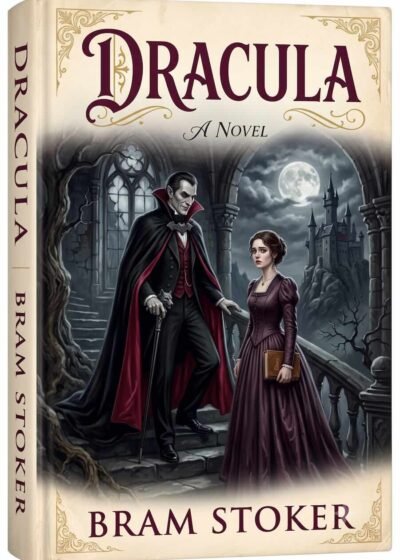
Published in 1897 by Irish author Bram Stoker, Dracula is a Gothic horror masterpiece that permanently established the conventions of the modern vampire mythos. While vampires had appeared in earlier nineteenth-century European literature—such as John Polidori’s The Vampyre and Sheridan Le Fanu’s Carmilla—Stoker synthesized regional folklore, historical research, and late-Victorian societal anxieties into an iconic narrative that has defined horror for over a century.
Epistolary Structure and Realism
The Journey of the Count
The story opens with English solicitor Jonathan Harker traveling to the Carpathian Mountains of Transylvania to finalize a London real estate transaction for the mysterious Count Dracula. Harker soon discovers he is a prisoner in a decaying castle, besieged by seductive vampire women while the Count departs for England. Dracula arrives in the coastal town of Whitby aboard a derelict Russian schooner, the Demeter, having methodically slaughtered its crew en route.
Once in England, the Count begins stalking Harker’s fiancée, Mina Murray, and her wealthy aristocrat friend, Lucy Westenra. Despite the interventions of Lucy’s suitors and the brilliant Dutch metaphysician Professor Abraham Van Helsing, Lucy succumbs to Dracula’s draining attacks and transforms into a vampiric undead predator herself. After Van Helsing’s group destroys Lucy’s vampire form to save her eternal soul, they form a resolute alliance to protect Mina—who has been psychically tethered to Dracula—and hunt the Count back to his fortress in Transylvania for a climactic battle.
Themes and Victorian Anxieties
Beneath its thrilling horror exterior, Dracula functions as a powerful allegory of late-Victorian anxieties. A dominant theme is “reverse colonization,” reflecting British Empire fears that primitive, foreign forces might infiltrate and overthrow civilized London. Dracula represents an infectious, corrupting contagion that threatens traditional moral order, Victorian purity, and Christian orthodoxy. Furthermore, the novel explores the limits of rational science; Van Helsing succeeds precisely because he is willing to abandon strict empirical skepticism and embrace spiritual faith, folklore, and ancient rituals—such as crucifixes, garlic, and wooden stakes—to combat a threat science alone cannot diagnose.
Enduring Cultural Legacy
Although not an instant literary bestseller upon initial release, Stoker’s novel gained immense momentum through twentieth-century stage and cinema adaptations, most notably starring Bela Lugosi and Christopher Lee. Today, Count Dracula stands as one of the most recognized characters in human storytelling. Stoker’s masterpiece remains the foundational text of vampire fiction, celebrated for its atmospheric dread, complex psychological undercurrents, and timeless portrayal of the battle between light and absolute darkness.