
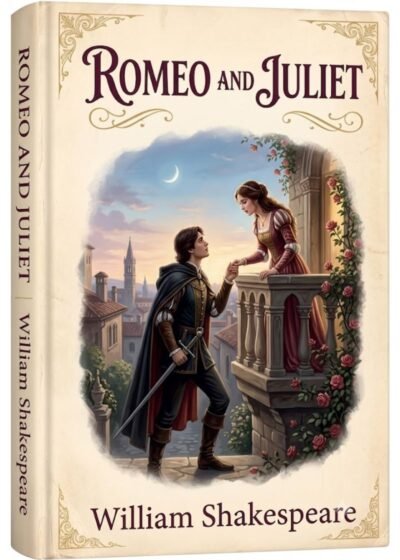
The Quintessential Tragedy: Romeo and Juliet
William Shakespeare’s Romeo and Juliet, believed to have been written between 1591 and 1595, stands as one of the most famous and enduring tragedies in the English language. It is the defining tale of “star-crossed lovers,” a phrase the play itself coined. At its core, the narrative explores the intense, transformative power of young love set against a backdrop of deep-seated, generational hatred.
Setting the Scene of Verona
The story unfolds in the sun-drenched streets of Verona, Italy, a city plagued by an ancient and bloody feud between two noble families: the Montagues and the Capulets. This bitter rivalry permeates every level of society, from the patriarchs down to the servants, creating an atmosphere of constant tension where a simple insult can instantly erupt into a deadly brawl. Shakespeare brilliantly establishes this volatile environment to contrast the purity of the lovers’ affection with the toxic, violent world they inhabit.
A Narrative of Passion and Peril
The tragedy is catalyzed when Romeo, a melancholic Montague, crashes a Capulet masquerade ball and locks eyes with Juliet, the daughter of his family’s sworn enemy. Their attraction is immediate, electric, and overwhelming. In the iconic balcony scene, they declare their mutual devotion and resolve to marry in secret the very next day. They are aided by the well-meaning but ultimately misguided Friar Laurence, who hopes their union will finally put an end to the familial strife.
However, the crushing weight of their families’ hatred quickly shatters their brief happiness. A street fight leads to the tragic death of Romeo’s charismatic best friend, Mercutio, prompting a grief-stricken Romeo to kill Juliet’s cousin, Tybalt, in retaliation. Romeo is consequently banished from Verona by the Prince. Desperate to avoid an arranged marriage to another nobleman and to reunite with her husband, Juliet takes a dangerous potion designed to mimic death. Tragically, the urgent message explaining the plan fails to reach Romeo in his exile. Believing Juliet is truly dead, a heartbroken Romeo returns to her tomb, drinks actual poison, and takes his own life. Waking only moments later to find him dead beside her, Juliet takes Romeo’s dagger and ends her own life as well.
Enduring Themes
Romeo and Juliet is driven by a profound exploration of major dualities and philosophical questions:
-
Love vs. Hate: The play illustrates how blindingly passionate love and violently irrational hate are two sides of the same intense emotional coin.
-
Youth and Impulsivity: Shakespeare captures the reckless, intoxicating urgency of adolescent passion, portraying a love so intense that it becomes a destructive force.
-
Fate vs. Free Will: The concept of destiny hangs heavily over the characters. The prologue explicitly warns the audience of their tragic end, suggesting that their demise is predetermined by the inescapable social structures surrounding them.
Lasting Legacy
The ultimate reconciliation of the Montague and Capulet families over the bodies of their children offers a bitter, devastating resolution to the chaos. More than four centuries after its debut, Romeo and Juliet remains deeply embedded in global culture. Its themes are universal, its poetry is unmatched, and its central narrative continues to inspire countless adaptations across literature, film, and theater, cementing its legacy as the definitive story of forbidden love.