
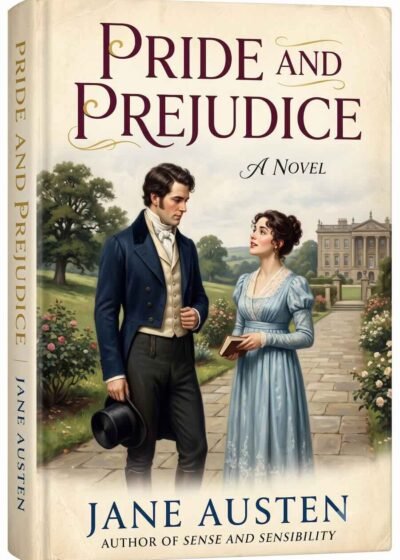
Published in 1813, Jane Austen’s Pride and Prejudice stands as one of the most celebrated and enduring masterpieces in English literature. Set against the formal backdrop of Regency England, the novel is both a sparkling romantic comedy and an incisive social satire. At its core, it deeply explores the intricate complexities of courtship, class distinctions, financial security, and the profound human capacity for delusion and personal growth.
The narrative centers on the Bennet family of Longbourn estate, comprising the sardonic Mr. Bennet, his foolishly ambitious wife, and their five unmarried daughters. Because the family estate is entailed to a distant male heir, Mrs. Bennet is consumed by a single, desperate obsession: securing advantageous marriages for her daughters to save them from future destitution. When the wealthy, amiable bachelor Charles Bingley leases the nearby Netherfield Park, the local society is thrown into a flurry of excitement. Bingley quickly forms a mutual attachment with the gentle eldest Bennet daughter, Jane. However, his even wealthier companion, Fitzwilliam Darcy, immediately alienates the community with his haughty demeanor and aloof superiority.
The novel’s heartbeat is the dynamic relationship between Darcy and the second Bennet daughter, Elizabeth. Intelligent, vivacious, and armed with sharp wit, Elizabeth takes instant offense when she overhears Darcy slighting her appearance at a local ball. Her wounded pride fosters a stubborn prejudice against him. This antagonism is actively deepened by the arrival of George Wickham, a charming militia officer who regales Elizabeth with fabricated tales of Darcy’s cruelty. When Elizabeth later discovers that Darcy engineered the separation of Bingley and Jane, her resentment crystallizes into outright hostility.
The pivotal turning point occurs during Darcy’s abrupt and disastrous marriage proposal at Rosings Park. While confessing his ardent love, he insults Elizabeth’s inferior family and social connections. She rejects him with blistering indignation, citing his arrogance and his mistreatment of both Wickham and Jane. In response, Darcy delivers a letter that meticulously dismantles Wickham’s false narrative and explains his genuine, if misguided, motives for separating Bingley and Jane. This revelation humbles Elizabeth, forcing her to confront her own blindness and errors in judgment.
As Darcy demonstrates profound moral character through his quiet generosity, most notably when he secretly intervenes to save the Bennet family from ruin following the youngest daughter Lydia’s scandalous elopement with Wickham, Elizabeth’s respect and affection for him blossom. Furthermore, Darcy encourages Bingley to return to Longbourn and propose to Jane, righting his previous interference. When Darcy proposes a second time, both characters have stripped away their initial flaws: his aristocratic pride has been tempered by humility, and her hasty prejudice has been replaced by discerning wisdom.
Ultimately, Pride and Prejudice transcends the conventional romance genre. Austen employs brilliant dialogue, psychological realism, and an ironic narrative voice to critique a rigid society that reduces marriage to economic necessity. By uniting Elizabeth Bennet and Fitzwilliam Darcy in a partnership rooted in mutual respect, intellectual equality, and genuine love, Austen crafted a timeless literary masterpiece that continues to captivate and inspire readers worldwide.