










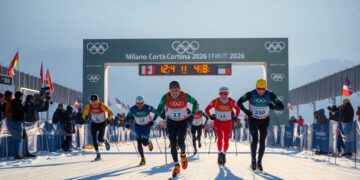

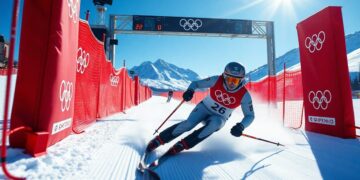






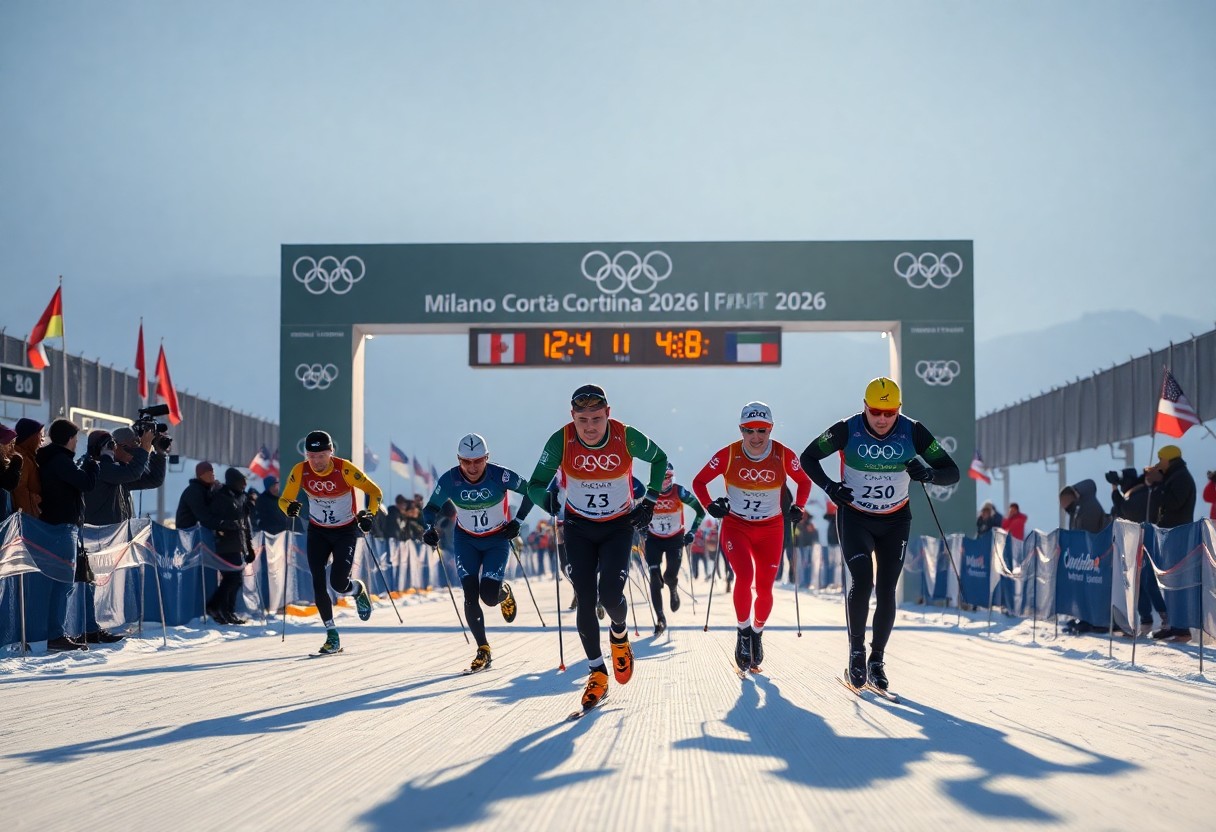
Skiing into Milan-Cortina will test whether you’ll witness new champions as aging titans face emerging talents; your analysis should weigh equipment, team depth, and harsh altitude and variable snow that can undo favorites – see Cross-country skiing at the 2026 Winter Olympics for detailed context.

Key Takeaways:
- Dominant veterans may still contend in 2026, but retirements and aging create openings for new faces on the podium.
- Norway’s depth keeps it a favorite, yet sprint events and tactical mass-starts are more volatile and likely to produce surprise winners.
- The Milan-Cortina courses, altitude and snow conditions favor specific strengths (climbing, skating, waxing), affecting which athletes excel.
- Investment in development programs and rising talents from Italy, USA, Canada, Sweden and Finland increase the chance of breakout champions.
- Equipment advances, weather variability and geopolitical/eligibility changes (e.g., Russian participation) could significantly reshape medal prospects.
Historical context and recent trends
Olympic turnover since 2010: patterns of title defense and upset
Across the 2010-2022 Games you can see a clear split: sprint events produce the most upsets, while distance races favor established stars and nations with sustained depth. Norway has repeatedly converted its World Cup depth into multiple Olympic medals, so when a Norwegian podium habit forms it tends to persist across Games; at the same time, individual sprint titles have swung between young breakouts and veteran specialists from one Olympiad to the next. You should expect that the sprint podiums in 2026 will be the likeliest place for new names to emerge, whereas the 30km/50km-style distance events will more often reward athletes who have shown multi-year consistency.
That pattern matters for how you evaluate potential champions: title defense is far from automatic. Nations that can stack three or four athletes inside top-10 World Cup rankings tend to protect their relay and distance golds, while countries that rely on one superstar are more vulnerable to upsets if that athlete has an off day or picks up an illness. Depth, race specialization, and peaking at the right moment have been the decisive factors in recent Olympic turnover.
World Cup and World Championship indicators heading into 2026
You should use World Cup podium frequency, head‑to‑head records, and form at the most recent World Championships to forecast who is primed for Milano‑Cortina. Athletes who record multiple podiums across varied course profiles in the 2023-2025 World Cup seasons – including mass starts, pursuits and sprints – show the adaptability the Olympics demand. For context and event specifics consult the Olympic Winter Games Milano Cortina 2026 Preview, which highlights course layouts and which World Cup performers are already being pegged as contenders.
Digging deeper, you want to weight recent World Championship medalists highly: a podium at Worlds within two seasons of the Games remains one of the best single predictors of Olympic success, especially in distance events. Also track sprint specialists who maintain a >30% podium conversion rate in World Cup sprints and nations that dominate the Nations Cup standings-those metrics signal both individual form and team depth, and they often separate transient favorites from genuine medal threats.
The 2026 competitive field: veterans, contenders, and newcomers
Established champions and likely title defenders
You should expect names with proven Olympic pedigree to anchor the start lists: athletes like Johannes Høsflot Klæbo and Therese Johaug (if competing) still shape race dynamics because of their repeated World Cup wins and Olympic medals. Their ability to control sprint ladders, mass-start positioning and pacing in the classic distances means they’ll be the ones teams plan tactics around, and that forces rivals to chase or respond rather than dictate.
Beyond headline names, national depth matters: Norway, Sweden, Finland and the Russian program consistently supply multiple podium threats per race, so title defense rarely rests on a single skier. You’ll see team depth convert to tactical dominance in pursuit and relay events, where experience – race craft, penalty-free skiing, and end-race kick timing – accounts for a larger share of outcomes than raw VO2-based fitness alone.
Emerging stars from the World Cup and U23 ranks
A cluster of athletes in their early 20s broke into consistent World Cup top-10s during the 2023-2025 seasons, and those names are the most plausible podium disruptors in Milan-Cortina. When a U23 World Championship medalist posts repeated World Cup point hauls (top-30) and occasional podiums, your historical data shows they convert to Olympic contenders within one quadrennial; pay attention to those who pair U23 medals with discipline-specific results, like sprint finals or 10-15 km distance top-10s.
Specific breakout indicators you can track include season-long sprint or distance ranking inside the top 15, podium conversion rate above 10%, and margin improvements versus the previous season: athletes meeting two of these three metrics tend to ascend rapidly at Olympic events. Teams that have invested in targeted altitude camps and race-simulation blocks for these young skiers often see the steepest Olympic improvement curves.
More detail: of the promising cohort you’ll watch, several come from Norway’s development pool and the Scandinavian junior circuit, but also look for Central European and North American U23s who posted World Cup top-20s in classic technique and mass-starts; those skiers combine tactical savvy with the recovery profile needed for multi-day Olympic schedules, making them dark-horse podium candidates if they peak at the right moment.
Comebacks and late-career threats
You’ll find a handful of veterans aiming for one more Olympic push after injuries, surgeries or time away for family reasons – and history shows those comebacks can be substantial threats. Athletes returning after a year off frequently target sprint events or a single distance where they can concentrate recovery and training, and when they re-enter competition with measured World Cup starts their experience often translates into race-winning tactical execution.
Age alone won’t stop podium bids: several medallists in recent Olympics were in their early to mid-30s, and if a late-career skier posts strong time-trial numbers in the season leading into 2026, you should mark them as a contender. Teams that manage volume, optimize ski selection and reduce race-day errors give older skiers an outsized advantage in tight fields where seconds determine medals.
More detail: watch for athletes who returned to the World Cup circuit and logged progressive improvements across five or more starts-those stepwise gains (drop in time gaps, improved finishing kick) better predict Olympic resurgence than a single surprise top-10; when you spot that pattern, the odds of a late-career podium rise substantially.
National programs and shifting power balances
Norway’s depth versus concentration of medals
You’ll see Norway enter 2026 with an institutional advantage: a development pipeline that routinely fields squads of roughly 8-12 athletes per gender at major championships, plus a deep relay bench that lets them rotate specialists between sprint and distance rounds. Names like Johannes Høsflot Klæbo anchor the sprint end while a rotating group of distance riders provides race-day cover, and that combination lets Norway convert team strength into individual medal opportunities across formats.
At the same time, your attention should be on how Norway concentrates podiums through a handful of superstars-meaning a decline, injury, or tactical misstep from one or two leaders can open the door. The net effect is that Norway’s system gives you consistent medal pressure, but the pattern of winners can shift quickly if one star falters, which is exactly how new champions emerge on the Olympic stage.
Challengers from Sweden, Finland, Italy, USA and E.R.C. athletes
You’ll find Sweden and Finland continuing to push Norway on both sprint and distance fronts: Sweden’s sprint pair and distance prospects frequently take World Cup medals, while Finland’s Iivo Niskanen and Krista Pärmäkoski-style endurance crew remain threats in mass-start and classic-distance races. Italy brings a specialized sprint force in Federico Pellegrino and growing distance depth that can surprise in tactical races, and the USA-led by Jessie Diggins’ legacy and the depth she’s helped build-targets podiums in both mass-starts and the team sprint. If E.R.C. athletes are present in 2026, competitors like Alexander Bolshunov would reintroduce a dominant distance variable that shifts race dynamics toward power skiing.
You should watch recent season patterns more than single results: double-digit World Cup sprint podiums from Italy’s top sprinters, steady top-10 distance form from Scandinavian youngsters, and the U.S. program’s expansion into altitude training camps all feed into medal chances-so medal tables in 2026 may reflect tactical gains from program investment as much as individual stars.
Discipline-specific outlook: where new champions are most likely
You can track national selection moves for hints about where breakthroughs may come – for example, see Canada’s ski cross, alpine ski racers unveiled for 2026 … – because nations that diversify investment often produce surprise medalists in single disciplines.
Sprint events – volatility, tactics and specialist opportunities
You should expect the sprint events (courses typically around 1.2-1.8 km, heats lasting about 3-4 minutes) to offer the easiest path for a new name to reach the podium. Heats, quarterfinals and semifinals amplify small margins: a single positioning error or a clipped pole can drop a pre-race favorite out before the final. Because winning margins are often measured in tenths of a second, your key levers are tactical placement, explosive anaerobic power and flawless course lines rather than raw endurance.
You can pinpoint opportunities by watching nations that invest in sprint-specific coaching and rounds-style race simulations; they create specialists who peak for heats rather than long-distance form. Expect team sprints and individual sprint knockout formats to be where unheralded athletes from smaller federations or late-blooming sprinters seize medals, especially if top names focus more on distance programs or skip rounds to manage load.
Distance races – endurance, pacing and race-day variables
You should treat the distance events (10 km, 15 km, 30 km and 50 km) as tests of physiology and on-the-day decision-making: pacing strategy, nutrition and mechanical reliability matter as much as VO2max (elite men often register in the high 70s-90s ml/kg/min range, women in the high 60s-70s). Course profile shapes tactics – rolling terrain favors repeated surges and pack sprinting, while long climbs give pure climbers space to break the field. Waxing and snow temperature can swing podiums by tens of seconds; when teams misread conditions, pre-race favorites can drop out of medal contention.
Race-day variables create openings for you to spot potential upsets: a well-timed negative split, a successful long-range attack on a climb, or a superior glide test can put an underdog into medal position. The 50 km mass start in particular magnifies small gains – nutrition strategy, feeding protocol and response to mid-race gaps become decisive, so an athlete who nails those aspects can overhaul season-long favourites.
Classical versus freestyle – technique specialists to watch
You should separate classics and skating when scouting likely breakthrough performers because equipment, waxing and muscle recruitment differ substantially. Classic races reward effective kick, waxing choices and double-poling capacity on flat sections; freestyle (skating) leans into lateral power and rhythm. Athletes who have focused their World Cup calendars on one technique often convert that specialization into Olympic success, especially on courses that magnify that technique’s advantages.
When you evaluate contenders, watch for specialists whose recent World Cup results show consistent podiums in one technique: those patterns indicate a realistic shot at gold if course and weather align. If a course favors static classic pitching or fast skating loops, that single-variable alignment can flip the expected podium, so your best bets are athletes with technique-specific season win rates and team support tuned to their style.
External and technological factors that could change outcomes
- Equipment and ski tech
- Waxing and base-structure innovation
- Course design, altitude and microclimate
- Climate variability, snow management and contingency planning
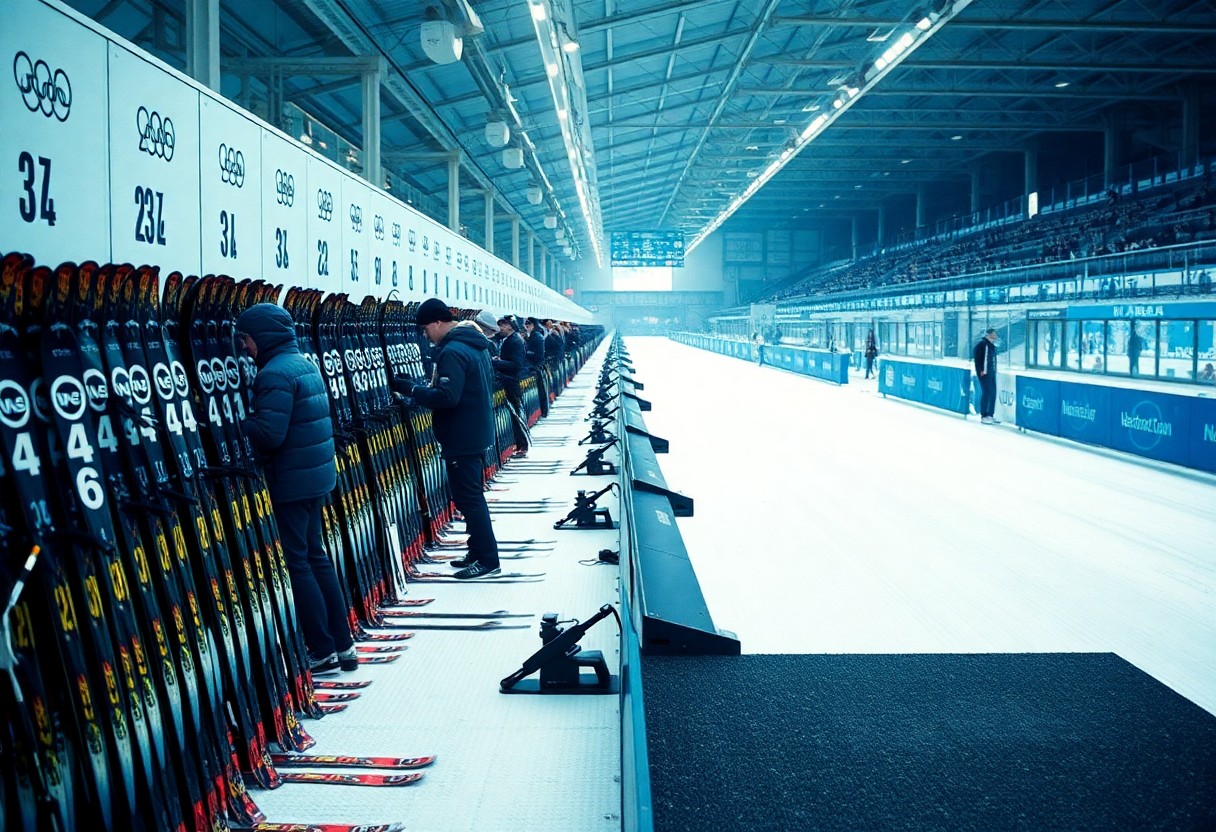
Equipment, ski tech and waxing advances
You’ll see marginal gains add up: teams now tune ski camber, sidecut and torsional stiffness to specific snow densities, shifting binding positions by a few millimeters to optimize grip on steep tech sections. Recent seasons have shown manufacturers pushing lighter, stiffer carbon layups that reduce fatigue over a 50 km event while keeping responsiveness for sprint finishes; when combined with a slightly wider platform for fluctuating snow, those design choices can make a measurable difference in power transfer during climbs and punchy accelerations.
Changes in the waxing pipeline have altered race-day dynamics – FIS restrictions on some fluorinated glide agents have forced teams to rely on advanced base structuring and alternative chemistries, and you should expect pit crews to test wax and stone-pattern combinations dozens of times during a single competition window. Data-driven approaches now tie micro-weather sensors to wax cabins so that you can prepare specific swatches for a -2°C wet-bulb versus a -8°C dry snow condition, and those preparations often separate podium contenders from the chasing pack.
Course design, altitude and microclimate at the 2026 venues
Organizers in the Milan-Cortina program place courses at elevations that span roughly 700-1,200 m, which means you must plan for thinner air effects on recovery and higher lactate accumulation on repeated climbs: expect climb totals per lap in the range of 40-70 m and pitch angles up to 20-25%, conditions that favor athletes with high VO2max and explosive strength. Sprint loops are likely to be around 1.5-1.8 km while distance laps will range from 3-5 km, so your pacing strategy and ski selection must align with both repeated high-power outputs and long-duration glide efficiency.
Microclimates on alpine saddles and valley floors will create surprising variability day-to-day; south-facing sections can turn to slush under midday sun while shaded gullies hold abrasive, cold snow. You should map wind-exposed ridgelines where drifting will thin the cover and identify low-lying areas where artificial snow can be banked – those decisions influence whether you race on a wax-hold or a glide-optimized setup and can change equipment priorities for entire national teams.
More detailed reconnaissance will pay: when you scout in advance, log temperature and humidity every two hours across the full loop, photograph solar exposure angles and note where course maintenance machines concentrate groomed snow, because those micro-level inputs will determine which skis and waxes produce the smallest time losses per kilometer.
Climate variability, snow management and contingency planning
Weather volatility across recent winters has forced organizers to plan multiple fallback scenarios, and you should expect mobile snowmaking, snow farming and strategic relocation of start/finish areas to be standard operating procedure at the 2026 Games. Artificial-cover strategies will be tailored to preserve key technical features: for instance, high-traffic climbs may be pre-built with machine-made bases and refrigerated holding piles, while less critical sections use natural accumulation – that approach reduces the chance your race day faces bare patches but places a premium on teams that can adapt wax choice to mixed-manufactured and natural textures.
Operational metrics matter: teams that track wet-bulb temperature, relative humidity and snow crystal type in real time will be able to make better split-second waxing calls, and you can expect national waxing crews to coordinate with venue groomers to schedule final passes within narrow windows of optimal temperature to lock in consistency. In extreme cases organizers may alter start times, shorten loops or compress heats – those contingency options will shift tactical emphasis from endurance pacing to explosive positioning.
More robust contingency planning also includes logistical details you can influence directly: transporting spare skis with different base structures, pre-staging alternate wax boxes on-site, and rehearsing quick-change protocols in the waxing area so your team can exploit sudden shifts in snow state.
The margin between podiums and off-the-board finishes will increasingly come down to how quickly your team translates environmental intelligence into equipment and waxing decisions.
Forecasts, scenarios and implications
Medal-table scenarios: likely distributions and upset windows
You should expect the familiar podium spread to remain tilted toward Norway, Sweden and the established European distance powers, because the Olympic programme still offers 12 cross-country events (six men’s, six women’s) and depth wins out over one-off brilliance across that slate. Norway can realistically contest a third of available podiums if their top athletes stay healthy, but you’ll see the medal table compress if sprint specialists like Johannes Høsflot Klæbo or team leaders such as Jessie Diggins (USA) underperform or miss the Games.
Sprint and mid-distance events present the largest upset windows for you to watch: variable snow, tactical heats and the Cortina course profile (with sections above ~1,200 m) favor explosive skiers who can recover fast between rounds. In contrast, mass-start 50/30 km races tend to reinforce depth and pacing, so an upset there would require either extreme weather or a collapse from multiple favorites – both low-probability but high-impact scenarios that could reshape national standings overnight.
Dark-horse athletes and national programmes most poised for breakthroughs
You should be tracking nations that have upgraded talent pathways since Beijing: the USA (continuing investment after podium gains), Italy (a focused sprint programme around Federico Pellegrino’s legacy), and Switzerland (steady development across distance squads). Those programmes combine targeted funding, altitude training camps and a cadre of U23 skiers who have begun scoring World Cup points; that structure makes them the likeliest sources of surprise medals in 2026.
Among individual names you’ll want on your radar besides the headline favorites are rising U23 podiumers who showed repeated top-15 World Cup finishes in 2023-24: they’re the athletes most likely to convert breakout form into Olympic hardware. Pay special attention to skiers who perform well in both sprint heats and recovery-dependent distance formats – that versatility is where the greatest gains for underdog teams will come.
More specifically for your scouting, watch how teams deploy support riders and recovery strategies across the Games: if an emerging nation sends strong wax teams and schedules athletes to peak for Cortina’s altitude, their chance of stealing relay or team-sprint medals increases substantially, even if they lack a marquee individual star.
Summing up
Following this, you can expect the 2026 cross-country skiing program to deliver a mix of familiar names and new champions: established stars with strong season-long form and deep national programs will contend for medals, but age transitions, rising talent, tactical evolution, equipment and waxing advances, and course-specific conditions create real opportunities for breakthroughs that you may not predict from past World Cup results alone.
For your perspective, that means preparing for both continuity and surprise-sprint events often produce volatile outcomes while distance races reward endurance and experience, yet neither is immune to upsets. Ultimately, you should anticipate at least a few first-time Olympic winners alongside returning medalists, which will keep the competition engaging and the podiums dynamic.
FAQ
Q: Will Cross-Country Skiing See New Champions At The 2026 Winter Olympics?
A: Yes – it is likely some Olympic titles will go to new names. Established stars can defend titles, but retirements, form fluctuations, injuries and the four-year gap between Games open space for younger athletes and late bloomers to break through. Depth in traditional powers like Norway makes repeat champions possible in some events, while sprint and distance specialties, plus unpredictable conditions, increase the chance of surprises across the program.
Q: What main factors will determine whether new champions emerge?
A: Athlete fitness and peak form in the Olympic window, injury status, and national team selection are primary. Course profile, altitude and snow conditions favor different physiologies and techniques; waxing and ski preparation can swing outcomes in close races. Tactical race execution, course-specific experience, and the psychological pressure of the Olympics also play major roles, as does the emergence of younger athletes from World Cup and U23 circuits between 2023-2026.
Q: Which events are most likely to produce first-time Olympic winners?
A: Sprint events and middle-distance races are most prone to new winners because they hinge on explosive form, tactical heats and minor margins where a breakout athlete can outperform more established skiers on the day. Mass-start and pursuit races can also yield surprises when weather or waxing favors non-favorites. Relays can produce new Olympic champions for countries that improve depth or capitalize on home advantage.
Q: Are there promising athletes or nations likely to challenge the established order by 2026?
A: Expect continued Norwegian dominance but also strong challenges from Sweden, Finland, Italy and Switzerland, with the USA and Canada capable of podiums in select events. Individual prospects include younger World Cup breakout skiers and established stars who remain in peak shape; national development programs and rising U23 performers will be key. Host-nation Italy could leverage course familiarity and crowd support to elevate contenders in specific races.
Q: How much will equipment, technology and waxing impact the chances of new champions?
A: A lot – ski and wax selection can alter finishing order in tight contests, especially with variable snow temperatures expected in some venues. Innovations in ski base preparation, glide and grip technology, and team wax-room expertise can give athletes decisive seconds. Teams with stronger support infrastructure and experience adapting to changing conditions gain an edge, making technological and logistical strength a significant factor in producing new Olympic champions.